
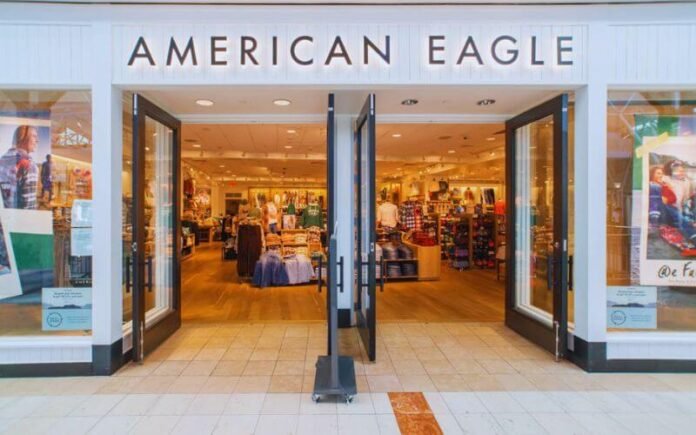
Recent headlines about American Eagle closing dozens of stores have sparked a straightforward question: is the brand shutting down for good? Shoppers are worried. Employees want answers. And social media posts claiming the company will “close forever” on a specific date have only added to the confusion.
This article breaks down what is actually happening at American Eagle Outfitters including the store closures, the logistics business exit, and what it all means for customers and anyone following the brand.
American Eagle Outfitters Is Still an Operating Business
The short answer is no American Eagle is not going out of business. The company has not filed for bankruptcy, announced a full shutdown, or entered any court-supervised restructuring process.
American Eagle Outfitters (AEO) is a publicly traded U.S. apparel retailer headquartered in Pittsburgh, Pennsylvania. It operates two active brands: American Eagle, known for casual wear and denim, and Aerie, which focuses on intimates and athleisure. Both brands primarily target teens and young adults.
The company’s website is fully active, with current inventory, ongoing promotions, and a clearance section. That is consistent with a business running normal operations not one winding down. No credible financial filings or reputable news sources indicate that a full closure is coming.
What the 35 Store Closures Actually Represent
AEO has announced the closure of 35 American Eagle store locations across the country, including three in Pennsylvania. This is part of a restructuring plan, not a sign that every location is shutting down.
It is a selective, strategic reduction. The closures are concentrated in underperforming mall locations a pattern that has played out across many retail chains over the past several years. A customer whose local mall store closes may assume the brand has disappeared, but AEO still operates hundreds of other locations and a full online store.
The longer-term picture is a planned reduction of the American Eagle store fleet from approximately 880 locations to somewhere between 600 and 700. Most of those closures are expected to happen as leases expire naturally the average lease term is around 2.8 years rather than through abrupt, forced exits.
That distinction matters. A company in genuine financial collapse tends to close stores immediately, often with liquidation sales. AEO’s approach is more deliberate, timed around lease schedules, which points to a cost management strategy rather than a crisis response.
The Quiet Logistics Shutdown Is a Separate Business Decision
One major source of confusion is the closure of AEO’s logistics subsidiary, Quiet Logistics. This is worth understanding clearly, because it is being misread as evidence that American Eagle itself is shutting down.
AEO acquired Quiet Logistics as part of an effort to build an in-house fulfillment operation sometimes described as an “anti-Amazon” move. The idea was to offer third-party logistics (3PL) services to other retailers while also handling AEO’s own fulfillment needs.
That experiment did not work out. AEO has now decided to exit the 3PL business entirely. Fulfillment centers in Boston and Dallas will cease operations in the first half of 2026. A facility in La Palma, California, is also closing. AEO is simultaneously opening a new distribution center in Phoenix to support its own retail and e-commerce operations going forward.
Here is a useful way to think about it: AEO launched a side business running warehouses for other companies and later decided it was not worth continuing. Closing that side business does not affect the core retail brand’s ability to sell clothes. The logistics exit impacts warehouse employees and former 3PL clients, but it does not mean American Eagle stores or the website are going away.
Store Reductions Are a Common Retail Strategy, Not a Sign of Collapse
Context helps here. Approximately 8,100 chain store locations closed across the U.S. retail sector in 2025 a 12% increase compared to 2024. The drivers are consistent: e-commerce growth, overbuilt mall footprints, and changes in how people shop since the pandemic.
AEO’s closures fit this broader pattern. Many mall-based apparel chains are shrinking their physical presence while maintaining or growing their digital operations. Closing underperforming stores reduces costs and frees up capital for higher-returning investments.
In AEO’s case, one of those investments is Aerie. The brand has been a consistent growth driver for the company, and AEO has cited plans to scale it significantly. Reducing the American Eagle store count is partly a reallocation of resources toward that growth channel not an admission that the business is failing.
Think of it like a restaurant chain closing its lowest-traffic locations while doubling down on delivery and its busiest spots. The footprint shrinks, but the business itself is still operating.
How to Evaluate Viral Rumors About Store Closings
A Facebook post circulating in public groups claims that “American Eagle Outfitters are closing for good on January 11th 2026.” That claim has no supporting evidence from company announcements, regulatory filings, or major business news outlets.
Posts like this spread quickly because they sound specific and alarming. But specificity alone does not make a claim credible. Here is a simple way to evaluate similar rumors:
- Check the source. Is it an official company statement, an SEC filing, or a reputable business publication? A Facebook group post does not meet that standard.
- Look at the company’s website. Is it still active, selling products, and running promotions? If yes, the business is operating.
- Search major financial outlets. Sites like The Wall Street Journal, Reuters, or Bloomberg would report a company-wide shutdown. If they have not, the claim likely does not have merit.
- Check for bankruptcy filings. U.S. companies entering Chapter 11 or Chapter 7 are required to file publicly. Those filings are searchable and would be widely reported.
Applying those checks to the American Eagle “closing forever” claim, none of the supporting evidence exists. The official website is active. No bankruptcy has been filed. No major outlet has confirmed a full shutdown date.
What This Means for Customers and Employees
If your local American Eagle store is closing, that is a real and inconvenient change. The employees at that location face a genuine disruption, and the closure of warehouse facilities affects workers in those cities as well. Those impacts deserve to be taken seriously.
But for customers nationally, the picture is more stable. American Eagle and Aerie stores continue to operate across hundreds of locations in the U.S. and Canada. The online store remains fully functional, and e-commerce is an increasingly central part of how AEO serves its customers.
Gift cards and loyalty rewards remain valid under current operating conditions. Store closures in specific locations do not automatically affect those programs. As long as AEO is operating stores and its website which it is those benefits remain in place. If that were to change, the company would be required to communicate it formally.
For coverage of developments like this across the broader business landscape, Daily Business Media tracks retail and corporate news with a focus on accuracy and context.
The Bottom Line
American Eagle Outfitters is not going out of business. It is restructuring closing underperforming stores, exiting a logistics side venture that did not deliver the expected results, and shifting its focus toward stronger brands and channels.
That process involves real consequences for some employees and local communities. But it is fundamentally different from a company collapse or bankruptcy. The brand continues to sell, operate, and invest in its future.
When store closure headlines appear, it is worth asking: is this a company disappearing, or a company adjusting? In AEO’s case, the evidence points clearly to the latter.
Also Read: